
City reviewing zoning regulations, infrastructure and housing growth ahead of April 2027 deadline
BY MICHELLE KEY
PUBLISHER
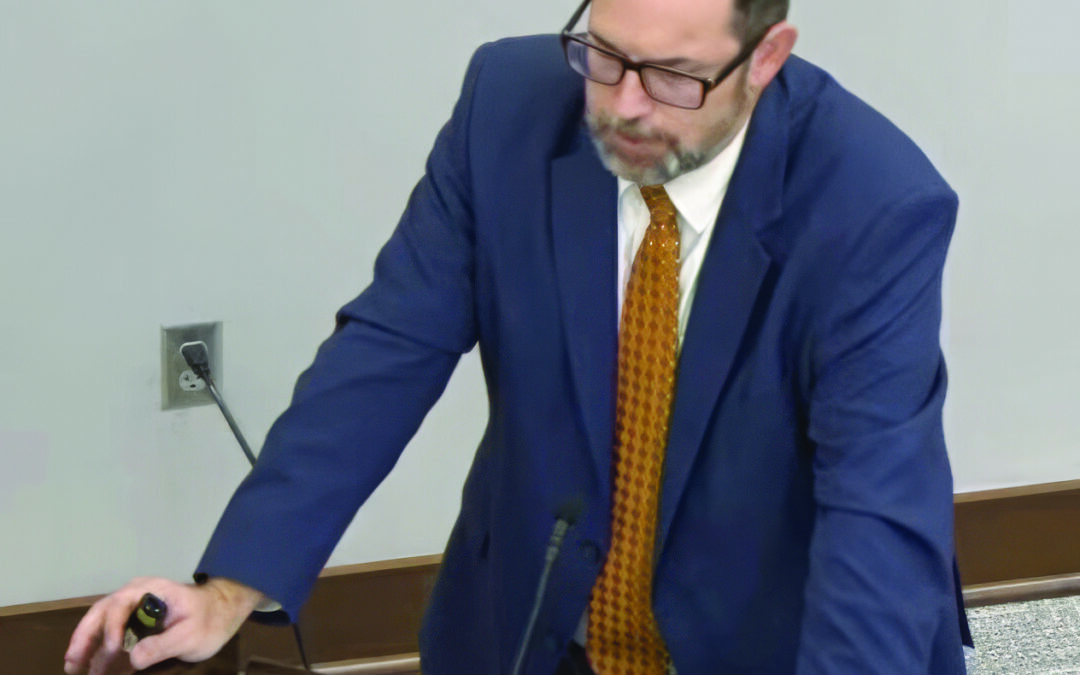
OPELIKA — Opelika Planning Director Matt Mosley told the Opelika City Council during its Oct. 20 work session that the city is making significant progress reviewing development regulations and infrastructure needs as it approaches the halfway point of its temporary residential development moratorium.
The 12-month moratorium, approved by the council in February and effective May 1, is scheduled to expire April 30, 2027. Mosley said the city is working toward completing its review within that timeframe.
“Of course, it’s always up to the council whether or not they propose to extend it, to reduce it, whatever that may be. But we are working through that with the idea that it will expire at 12 months, April 30, 2027,” Mosley said.
The moratorium was established to give city officials time to evaluate how residential growth affects infrastructure, municipal services and future development. It restricts certain new residential development approvals, including rezonings, conditional uses and planned unit developments.
Previously approved projects may continue as long as their approvals remain valid.
Mosley said Opelika has approved approximately 13,000 residential units in various stages over the past decade, although many are included in long-term development plans.
“Now, keep in mind, many of those are part of 20-year development plans. They’re not necessarily things that are going to be developed in the next year or two years,” he said.
Approximately one-third of those units have already been developed.
Residential construction has continued at a record pace. Mosley said the city permitted approximately 788 single-family homes during the fiscal year that ended Sept. 30, setting a new annual record.
The growth has also brought changes in housing types, including smaller-lot homes, townhouses, multifamily developments and build-to-rent communities.
Reviewing development regulations
Mosley said the city has focused on three primary areas during the moratorium: updating the Public Works Manual, revising subdivision regulations and rewriting portions of the zoning ordinance.
The Public Works Manual, which establishes standards for roads, sewer systems and other infrastructure, is approximately 95% complete.
The revisions incorporate modern construction standards and clarify which departments are responsible for various stages of development review.
The city has also made substantial progress on its subdivision regulations, which govern how property is divided for development.
Proposed changes address open space requirements, street design, emergency access, buffering between developments and minimum lot sizes in rural areas.
Mosley said the city is also working to address inconsistencies between development requirements within Opelika and those in surrounding areas under the city’s planning jurisdiction.
He explained that existing regulations can sometimes encourage development outside the city limits because smaller lots are permitted in certain surrounding areas.
The zoning ordinance review is more extensive and includes evaluating the types of development permitted in residential, commercial and industrial districts.
“We don’t want to just allow somebody to have a use because that’s the way it’s been for 30 years in that that zoning designation,” Mosley said.
The review includes changes intended to ensure new homes built on vacant lots in established neighborhoods are compatible with surrounding properties.
According to Mosley, staff members are also examining regulations that allow residential development on prominent commercial corners where retail or other commercial uses may be more appropriate.
Industrial zoning changes under consideration would establish clearer distinctions between light and heavy manufacturing uses.
Another significant focus involves planned unit developments, commonly called PUDs, which have been used for many of Opelika’s larger residential developments.
Mosley said the city’s existing PUD process has provided developers considerable flexibility in proposing projects.
“In some instances, I think we probably were a little too flexible,” he said.
Under the proposed changes, developers would face a more detailed, multistep review process and be required to demonstrate how their projects would benefit the city.
Mosley said staff members have completed much of the difficult work involved in revising the zoning ordinance.
The goal is to bring the proposed changes before the Planning Commission for review and a possible recommendation to the City Council in February or March 2027.
Infrastructure capacity and improvements
Alongside the regulatory review, Opelika is evaluating its water, sewer and transportation systems to determine where improvements are needed to accommodate continued growth.
Mosley said the city’s wastewater treatment facilities have sufficient overall capacity, but portions of the collection system need improvements to move wastewater efficiently to treatment facilities.
“Our sewer issues, you know, we don’t have any. We can treat significant amounts. There’s a need to improve some of our collection systems, making sure we can get the the waste to the treatment plant,” Mosley said.
The city is preparing for a major sewer infrastructure project involving a 12-inch force main extending from the northeast industrial park to the east side treatment plant.
The project is intended to relieve pressure on existing lift stations, improve capacity and support residential service in northeastern Opelika.
Mosley said a study of the northeast sewer basin has been completed, while additional assessments continue in the southeast basin.
He also reported that the city’s water system has substantial available capacity, although some areas face service limitations because of elevation and water tower heights.
Transportation planning remains another priority
Projects under consideration include access improvements along Columbus Parkway, intersection improvements and ongoing road construction intended to reduce congestion.
Mosley also discussed the city’s Safe Streets for All initiative, which is examining ways to reduce pedestrian and vehicle crashes.
Several major roadway projects are nearing completion or underway, including the Thomasson extension, Cunningham roundabout and improvements associated with the city’s east-west corridor.
Build-to-rent housing on the rise
During questions following the presentation, Ward 4 Council Member Chuck Beams asked Mosley about the increasing number of build-to-rent developments in Opelika.
These communities typically resemble traditional single-family neighborhoods, but the homes are owned and operated as rental properties.
Mosley said the housing model has expanded considerably in recent years.
“It’s something that has come along in the last really heavily in the last 10 years or so, and we’ve been seeing a significant amount of that within the last three or four years,” he said.
Mosley identified approximately four build-to-rent projects in Opelika, including Creekside Cottages and developments on South Fox Run, Veterans Parkway and Douglas Street.
He said the communities can provide additional housing options and may fit well within existing neighborhoods. However, long-term maintenance and management are important considerations.
“If one starts to have issues, the entire complex can quickly run into issues,” Mosley said.
He explained that a centrally managed development can maintain a consistent appearance when properly operated, but inadequate maintenance can affect an entire community.
Mosley said Opelika currently has approximately 5,600 rental units, including about 3,500 traditional apartments. Other rentals include single-family homes, townhouses and build-to-rent properties.
Rental properties account for approximately 30% of the city’s housing units, he said.
“And so, with anything, any of these housing types, what we’re interested in making sure is that we don’t get overburdened with any particular type,” Mosley said.
Beams also asked whether most build-to-rent developments are financed by private equity rather than local owners. Mosley said much of the development appears to be financed through private equity and larger multifamily developers.
Ward 5 Council Member Todd Rauch asked whether the proposed zoning revisions would address concerns about group homes and rehabilitation facilities operating in residential neighborhoods.
Mosley said the changes would provide clearer regulations governing where those facilities may operate and how they fit within surrounding residential areas.
He said his department will continue sharing information with council members and residents as the revisions are finalized.
The city is working toward completing the regulatory review before the moratorium expires next spring.
