
BY MICHELLE KEY
PUBLISHER
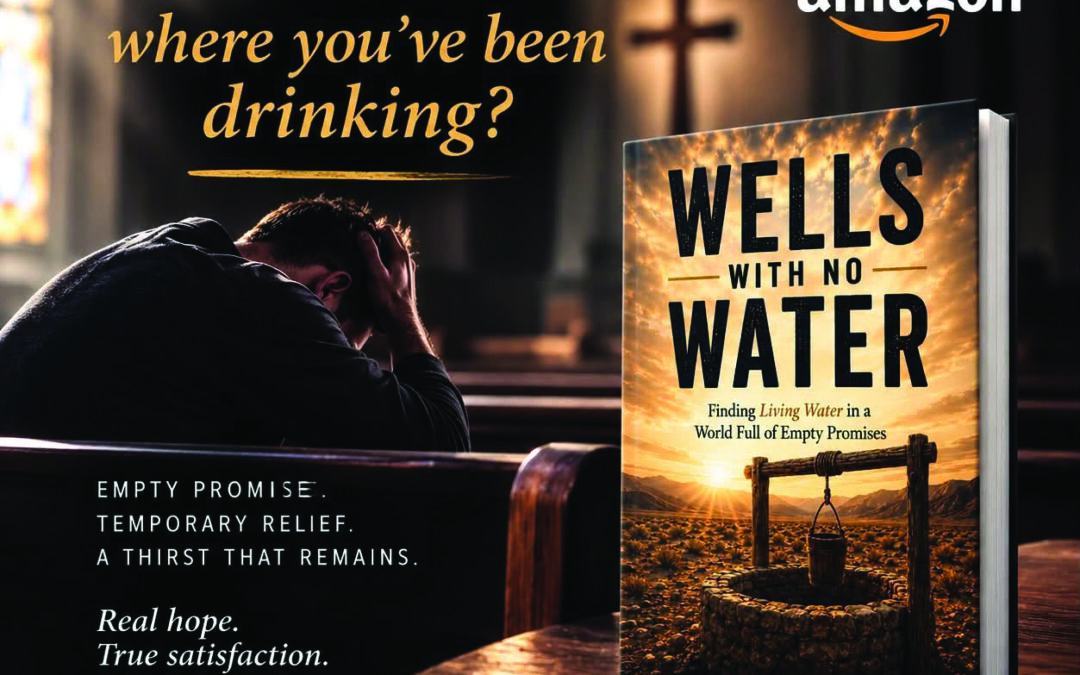
OPELIKA — As Robert Miller sat down to write “Wells With No Water,” he thought he was writing about the things people pursue in hopes of finding fulfillment.
Somewhere along the way, the focus changed.
“At first, it was much easier to write about ‘people,’” Miller said. “People chase success. People put too much trust in relationships. People look for identity in careers or accomplishments.”
Then, “‘people’ became ‘me.’”
Miller, who serves in ministry at Tenth Street Church of Christ in Opelika, said the book ultimately required him to examine his own ambition, accomplishments, disappointments, mistakes, church hurt and periods when he was running from God.
“It stopped being simply something I wanted to teach and became something I needed to confess,” he said.
The title “Wells With No Water” comes from 2 Peter 2:17, where Peter describes false teachers as “wells without water.”
For Miller, the image became a larger metaphor for the things people approach expecting satisfaction, only to find they cannot provide what they are seeking.
“A well makes a promise simply by being there,” Miller said. “Nobody walks up to a well hoping to find dirt. You come because you expect water.”
Success, money, relationships, recognition and pleasure can all make their own promises, he said. Even things that are good in themselves can become problematic when people expect them to provide their identity or ultimate fulfillment.
“The problem comes when we ask them to carry the weight of our souls,” Miller said.
Miller said his understanding of that struggle came in part from his own experiences.
When he was a young man, baseball became a major part of his identity and something he believed would shape his future. Later came military service, rank, recognition, career and ministry.
Eventually, he recognized a pattern.
“The applause gets quiet. The accomplishment becomes yesterday’s accomplishment, and before long you’re looking for the next thing,” Miller said.
That realization helped shape one of the book’s central ideas: human thirst for meaning is not itself the problem.
“Thirst tells you you need something,” he said. “The question is where you go with it.”
The book draws heavily from Miller’s own life, including baseball, military service, Afghanistan, marriage and family, ministry, mission work in Africa and India, church hurt and personal failures.
Still, Miller said he did not intend to write a memoir.
“My life isn’t the point of the book,” he said. “My stories are there because sometimes the easiest way to help somebody recognize their own empty well is to be willing to admit where you found yours.”
That level of honesty was not always comfortable.
Miller said some portions of the book would have been easier to omit, particularly given that people who know him personally may learn things about his life they did not previously know.
“I’m a minister, and I never want people to get the impression that I preach about grace because I studied it in a textbook,” he said. “I preach grace because I need it.”
He said he intended the book particularly for people whose lives may appear complete from the outside but who privately feel something is missing.
That could be someone with a career, family, home and active church life, he said, or someone who believes past mistakes have placed them beyond God’s reach.
“I also wrote it for the person who has made a mess of things and wonders whether God could possibly still want them,” Miller said.
Three passages of Scripture became especially important to the book.
In addition to the “wells without water” imagery from 2 Peter, Miller points to Jeremiah 2:13, which contrasts God as the “fountain of living waters” with broken cisterns, and the story of Jesus and the Samaritan woman at the well.
“That story captures what I hope happens with the reader,” Miller said.
Although the manuscript itself came together relatively quickly, Miller said its origins stretched across decades of experience.
“There are pieces of the kid who thought baseball would define him, the young man who joined the Air Force after 9/11, the husband and father, the missionary, the minister and even the man who made mistakes and had to learn firsthand what grace really means,” he said.
According to Miller, the finished book available to readers has been “surreal.”
“Maybe the best way to say it is that the book didn’t take very long to write, but it took a lifetime to live,” he said.
Miller has preached sermons and taught classes for years, but publishing a book felt different because the words — and the personal experiences behind them — remain available for anyone to read.
He said early responses have helped reassure him the vulnerability served a purpose.
One reader told Miller the book felt less like being preached at and more like a conversation.
“That stayed with me because it’s exactly what I hoped the book would feel like,” Miller said. “I wanted it to feel more like we were sitting across the table from one another.”
Miller said he hopes readers finish the book willing to examine what they have expected to bring them fulfillment and whether it has.
“The goal of the book isn’t simply to convince people that the wells are empty,” he said. “That would be a pretty depressing book. It’s to point them toward the Fountain that isn’t.”
“Wells With No Water” is available on Amazon at www.amzn.to/4cIjgNR
Miller said the book is unlikely to be his last. He is already considering another book, “Clouds Without Rain,” which would continue exploring people, ideas and other sources of trust that promise more than they can ultimately provide.
He said writing is another extension of the ministry work he already feels called to do.
“I know what it’s like to be lost,” Miller said. “I also know what it’s like to be found.”
