
CONTRIBUTED BY
KELSEY KINTZ-ROBERTS, ARYANA PRATT, CAMDEN COBURN AND BAILEY CUNNINGHAM
LEE COUNTY — In Lee County, nicotine addiction among teens has become commonplace.
Addiction is normalized in our schools’ and communitys’ social circles, covered up easily by teenagers and reinforced by daily routines and habits.
In response, each of our four team members aged 16 to 18 interviewed teens aged 15 to 18 living in Lee County, (dividing the interviewers into the same age range as the interviewees).
Through our research, our team identified a key element that helps us understand nicotine addiction: teens do not actually enjoy nicotine.
Before we launched our research project, we wanted to answer one question: do teens like smoking nicotine, and if not, why do they continue?
For many teens, nicotine use is not just a habit, but an overwhelming dependency shaped by their environment, stress and early exposure.
“I like hitting it when I’m stressed,” one of our peers shared. “It feels like a routine.” Another peer we interviewed described one internal conflict: “I need to quit. I don’t like it, but I also love it… I’ve been hitting them every day since I was 14, so it’s hard to cut that out of my daily life.”
These firsthand experiences reflect broader trends for many teens across America.
In Alabama, nearly one in five high school students report recent e-cigarette use, and more than half have tried vaping at least once, according to statewide survey data.
Across the United States, about 7.8% of high school students currently use e-cigarettes, making them the most common tobacco product among youth, according to the Centers for Disease Control and Prevention.
We found that this data is similar to the data we collected here in Lee County.
Through many of our interviews, we found early-usage as a key component of nicotine addiction.
Many reported being introduced to nicotine at an early age (as young as age 9 in our interviews), often through friends or older family members. One peer recalled trying a vape for the first time in seventh grade because “it seemed cool,” and later gaining access through a shop that did not check identification.
We also identified social environments as a major contributor, manifesting in ways beyond “peer pressure.”
The correlation seems direct: If your social group loudly disapproves of nicotine usage, the less likely you are to smoke nicotine. But in other groups, addiction is extremely normalized, making it so much harder to quit.
“Everyone around me quitting would make it easier,” one peer explained.
Others described cycles of quitting and relapse, often tied to withdrawal symptoms. “I quit all the time,” one peer said, “but then the withdrawals get to me, and I feel like I actually need it or I’m going to get stressed or be mean.”
Health experts say that this feeling is not just psychological. Nicotine is highly addictive and can interfere with brain development in adolescents, making it harder to concentrate, control impulses and manage emotions.
“I have friends who are trying to quit, but they become more irritable and distant,” one of our peers observed. Another noted that when friends do not have access to nicotine, “they get antsy… and it takes a lot of effort to hide it.”
Along with teens willing to share their drug addiction experiences, we also interviewed teens who are friends or relatives of teen nicotine users.
“Watching my friends struggle with addiction is really hard,” one peer said, “It’s made me realize how challenging it can be, and I wish more people understood that.”
Our team’s goal is to reduce the stigma of underage nicotine addiction here in Lee County. Shaming or belittling nicotine users will never help with recovery. We hope that everyone can approach drug usage with an open mind. You never know what someone might be going through to turn to drugs or what made them unable to quit. It is a privilege to be drug-free.
In communities like Lee County, addressing this sad reality of drug addiction begins with listening, understanding and taking teen voices seriously.
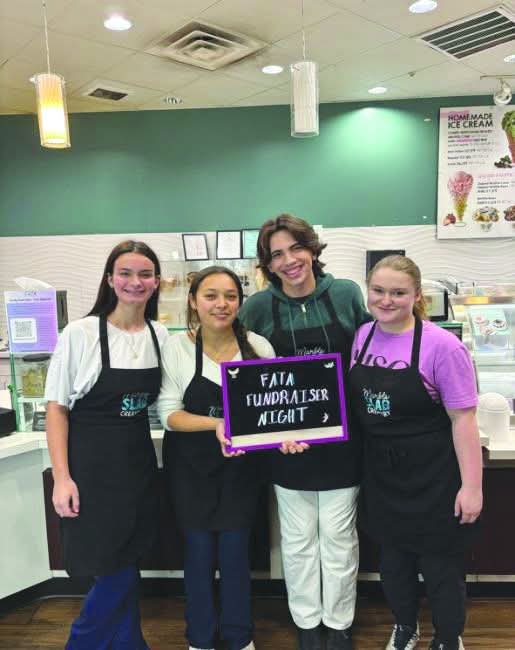
Bailey Cunningham (17), Kelsey Kintz-Roberts (16), Aryana Pratt (17) and Camden Coburn (18) are students at Auburn High School in Lee County and members of the school’s HOSA program. Competing in the Community Awareness category, the group earned second place at the state level and will advance to international competition in Indianapolis. Through fundraising, educational outreachand community events, they work to raise awareness about druguse and its impact on their community.
