
University employee says lawsuit is part of harassment campaign
BY DANIEL SCHMIDT
THE OBSERVER
AUBURN — Two former Auburn University graduate students and three faculty members have filed a federal lawsuit accusing a wildlife-research project leader of fostering a hostile, oversexualized “frat house” environment and accusing the university of retaliating against those who complained.
But an Auburn University employee is disputing the core allegations, casting the lawsuit as the culmination of a nearly two-year bullying campaign against the project’s principal investigator, assistant professor Jonathan Valente.
The suit was filed by former doctoral students Kaitlin Connelly and Marlene “Mars” Walters, faculty members Robert Gitzen and Christopher Lepczyk and research associate Jean Fantle-Lepczyk.
It raises retaliation claims under Title IX and Title VII of the Civil Rights Act of 1964, and names Valente individually, alleging he violated the 14th Amendment’s equal protection clause.
The dispute centers on the federally funded Inventory and Conservation Planning Project, known as ICP2, which studied the effects of habitat management on Alabama wildlife in 2024.
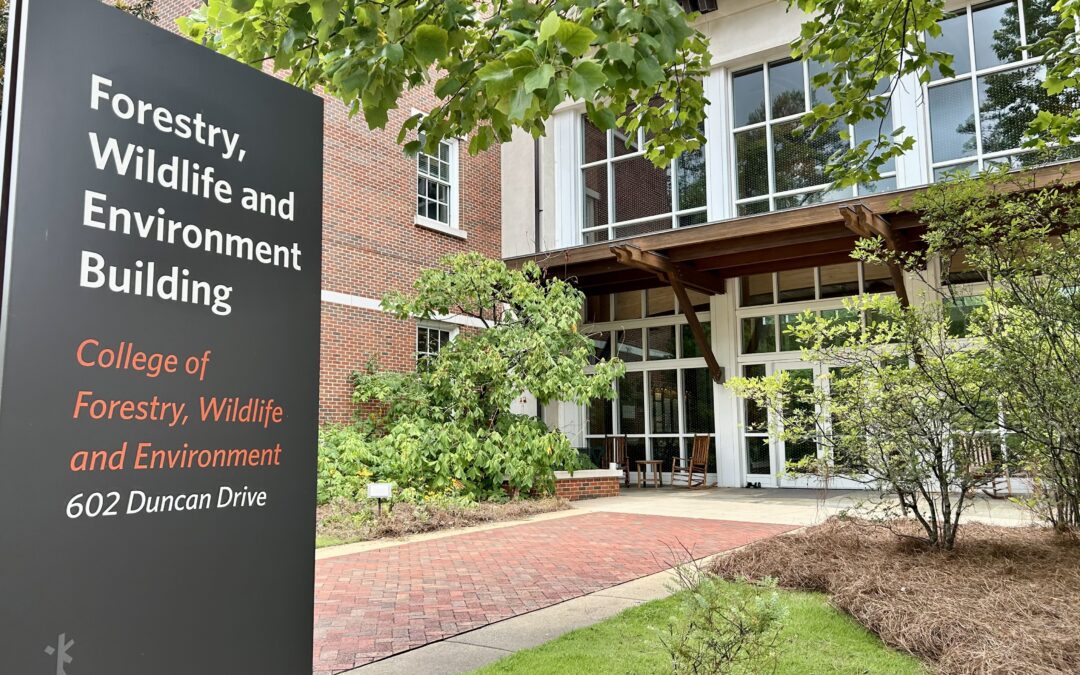
Connelly and Walters worked on the project as graduate research assistants in the university’s College of Forestry, Wildlife and Environment.
Background information
According to the complaint, Connelly and Walters found the predominantly male research team hostile and discriminatory, describing a “frat house” atmosphere in which male participants traded sexual banter about women they knew or were dating.
The lawsuit alleges Valente sometimes joined in, making jokes about sexual activity and male genitalia, and that he allowed the environment to persist, favored male colleagues and diminished the two students’ work.
Connelly, who identifies as lesbian, and Walters, who identifies as a nonbinary transgender person, say they were treated differently than their male colleagues.
That included, they alleged, being cut off mid-sentence during group discussions and ridiculed for ideas that drew a friendlier response from Valente when raised by men.
Walters also alleged Valente showed little interest in the mentorship expected of a faculty adviser, instead treating their relationship as one between an employer and employee.
The lawsuit says after Walters asked to pursue academic work outside ICP2, Valente told them their participation had been a “waste of time.”
Walters, whom the suit says developed depression and anxiety requiring counseling and psychiatric treatment, then left Auburn sometime during May 2024.
The lawsuit further alleges Valente ignored a prohibited romantic relationship between Justin Hall, a research associate and co-project manager, and a graduate student.
The suit says Valente was aware of the relationship and allowed the two to share hotel rooms apart from the rest of the team at times, and that the graduate student allegedly walked around nude during several overnight trips.
The allegations
Connelly remained at Auburn and filed a series of complaints through the university’s Equal Opportunity Compliance Office and Title IX office.
In fall 2024, Gitzen, Lepczyk and Fantle-Lepczyk, who served as Connelly’s adviser, also submitted their own complaints about the students’ treatment.
In early September 2024, Gitzen reported Hall’s alleged relationship to the Title IX office, and he and Lepczyk also alerted the college’s human resources office.
The plaintiffs say the university then punished those who spoke out.
Gitzen and Lepczyk were removed from leadership roles on ICP2, and Connelly was directed to leave the project in late 2024 in a decision the lawsuit says forced her to abandon her doctorate. Both students ultimately left the university.
The suit also claims the retaliation extended beyond ICP2.
Gitzen was removed in early May 2025 from his role as principal co-investigator on a collaboration with the Alabama Department of Conservation and Natural Resources — for reasons the complaint says were tied explicitly to his ICP2 complaints — and learned days before filing that the university would proceed without him on a separate ADCNR project built on an idea he had developed.
Lepczyk, who had recently finished a term as dean of the university’s Honors College in summer 2024, says he was passed over for promotions and warned by senior officials that his complaints were jeopardizing his professional standing.
On May 29, 2025, then-associate dean Todd Steury and senior academics Mark Smith and Steven Ditchkoff allegedly told him his ICP2 role risked “injuring his professional stature.”
When he applied to be associate dean of research in December 2025, a search committee questioned his effectiveness “in light of the controversies over ICP2,” the suit says.
The lawsuit alleges Fantle-Lepczyk then lost research opportunities and was passed over in fall 2025 for a tenure-track appointment given to a less-qualified candidate.
In announcing the filing, HKM Employment Attorneys lawyer Artur Davis, who is representing the plaintiffs along with co-counsel Jerilyn Gardner, said Gitzen and Lepczyk should never have been removed.
“A prestigious research project is not a dive bar, and it shouldn’t involve misogynist hazing,” Davis said. “No professor ought to make themselves a target for standing up for vulnerable students.”
A competing account
The university employee, who spoke on the condition of anonymity due to fear of retaliation, described the lawsuit as the product of an ongoing bullying campaign against Valente that has now lasted for nearly two years.
The employee said it was part of a broader, longstanding pattern of intimidation by Lepczyk toward junior faculty, students and others, and that the university has never meaningfully addressed this behavior.
The employee also alleged that Lepczyk has pressured newer faculty members to assume teaching responsibilities connected to his wife’s course, sought inclusion on research grants because of his seniority or institutional status and attempted to intimidate faculty members and students through his conduct at research seminars and academic defenses.
The employee said Gitzen and Lepczyk were removed from the ADCNR project not in retaliation, but because they failed to meet deadlines and other deliverables established and agreed upon long before work ever began.
They added that this was primarily due to Gitzen’s and Lepczyk’s failures to properly communicate with the principal investigator, inappropriate communications with associated students and other actions that resulted in project delays.
ADCNR officials approached the university in late fall 2024 to express a lack of confidence in Lepczyk and Gitzen and asked that both be removed. After roughly six weeks of conflict over the project’s direction, they asked Valente to decide how the work would proceed.
When approached for comment about the agency’s perspective on the disputed claims, Charlanna Skaggs, the ADCNR’s deputy commissioner and general counsel, said the agency would not comment on the case.
Gitzen and Lepczyk then responded, the employee said, by filing “unfounded” ethics complaints and ultimately encouraging Connelly to pursue her claims.
Roughly two and a half weeks after Gitzen and Lepczyk were dismissed from the project, the university instituted a plan intended to ease tensions and comply with the ADCNR’s earlier requests.
That plan included that all ICP2 bat data be turned over to the ADCNR along with a detailed explanation of how the data was collected; that Gitzen, Lepczyk and Connelly complete data processing of ICP1 data by May 2025; and that all ICP1 and ICP2 data be made available to the ADCNR along with quarterly progress reports.
Every witness in an internal report described those requests as more than fair, though the report acknowledged the plan was not fully explained to Connelly, Gitzen and Lepczyk until March 2025.
The report described an “unreconcilable breakdown in the working relationship” due to hostile emails that Connelly and Gitzen had sent to Valente, and in June 2025, the state agency revoked permission for Connelly, Lepczyk and Gitzen to use project data, citing repeated failures to turn over the requested data, equipment and quarterly reports.
The employee also denied accusations that there was a relationship between Hall and the graduate student, describing them as friends.
The employee claimed that while Hall and the graduate student were reminded that perceptions were important, neither engaged in inappropriate behavior nor did anything Valente could police within this capacity as the project’s principal investigator.
An internal university report did not definitively find whether Hall violated university policies but sanctioned him regardless. Actions included curtailing Hall’s private contact with the graduate student and Valente reprimanding Hall.
The employee added that they believed the inclusion of this alleged relationship was unrelated to the broader lawsuit and that its inclusion was a way to demean and intimidate others who worked under Valente.
Documents included with the plan the university created to ease tensions and comply with ADCNR requests mentioned that the unnamed graduate student chose to work with Valente instead of Gitzen and Lepczyk, who the graduate student had previously worked with.
When approached for comment about the situation, Valente said his legal counsel advised him not to comment on ongoing litigation.
Internal investigations
Two reports commissioned by the university’s Equal Opportunity Compliance division into the students’ claims also paint a markedly different picture than what the lawsuit alleges.
The first, examining Connelly’s 14 allegations — among them that she was stripped of funding and supplies, held to impossible deadlines, threatened over physical job requirements and targeted with false rumors — concluded Valente did not retaliate against her.
Investigators found that while Connelly’s account was consistent, her knowledge of certain meetings and prior corrective actions exceeded that of other witnesses, leading them to conclude her advisers, Gitzen and Lepczyk, had “likely influenced her perceptions.”
The report also found no evidence of a harassment campaign and described Valente’s communications with Connelly as appropriate and professional.
The second report examined Walters’ allegations, including claims of a “white male lab culture” and that Valente used a “paternalistic” and “emotionally manipulative” communication style.
Particularly, Walters’ complaint hinged on a conversation they had with Valente in a hallway outside of a classroom, with Walters accusing Valente of making vulgar comments about male genitalia and other inappropriate remarks.
Investigators wrote that no witnesses could corroborate Walters’ account and that statements made during the process suggested Walters “may have entered the lab environment with preexisting concerns about gender dynamics.”
According to that report, Valente provided evidence and corroborating witnesses, including regarding the disputed remark about male genitalia, and numerous female colleagues and students said they never saw him treat students differently based on gender.
As a result, the university’s investigators concluded Valente violated no policies in either case.
When asked about the situation, the university’s Office of the General Counsel said it would not comment on ongoing litigation.
According to PaceMonitor, a website that tracks federal district and bankruptcy court cases, Valente and the university were served with summonses on July 26 and July 28, respectively, requiring them to respond to the lawsuit.
Valente and the university must do so by Aug. 17 and 18, respectively. The case is currently set to be overseen by Judge Chad Bryan in the U.S. District Court for the Middle District of Alabama.
