
By Daniel Schmidt
TUSKEGEE — A Montgomery man accused of kidnapping and murdering 19-year-old Aniah Blanchard more than six years ago was found guilty on one count of felony murder and one count of murder on March 19.
A jury convicted Ibraheem Yazeed, 36, of the two downgraded charges after prosecutors presented security camera footage, forensic cell phone data and witness interviews that included Yazeed’s alleged acknowledgment that he killed her.
According to sentencing guidelines, jurors found that Yazeed committed felony murder while he intended to rob Blanchard, and murder since he originally didn’t intend to kidnap her.
State statutes indicate he now faces the possibility of either 10 to 99 years imprisonment, or life imprisonment with the possibility of parole.
His sentencing is set for May 7 at the Macon County Courthouse at 10 a.m.
The state originally sought two counts of capital murder: one during the commission of a kidnapping and the other during a robbery.
It also sought a third capital murder charge stemming from Yazeed allegedly killing Blanchard inside the vehicle.
Prosecutors dropped that charge since forensic evidence couldn’t definitively prove Blanchard died inside the vehicle.
Before rendering a verdict, jurors appeared hung up over whether the state had fully made its case beyond a reasonable doubt for the kidnapping charge and sought clarification from Fifth Judicial Circuit Judge Tom Young.
They also sought guidance from Young concerning the differences between two possible murder charges 30 minutes before adjourning on Wednesday.
Thursday’s verdict came after nearly seven and a half hours of deliberation over two days, and 10 days after the long-awaited trial began at the Macon County Courthouse.
After the COVID-19 pandemic repeatedly delayed the trial, the verdict resulted in mixed emotions for Blanchard’s mother, Angela Haley-Harris, her father, Elijah Blanchard, and many others.
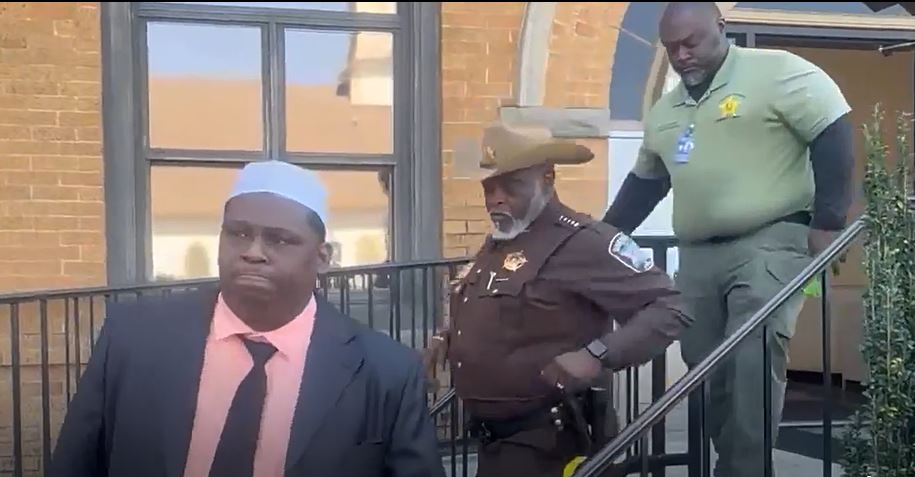
As the lead juror read the verdicts, Blanchard’s family silently held each other and cried as Yazeed sat stone-faced and emotionless under his white taqiyah.
Following the trial’s conclusion, defense attorney William Whatley offered condolences to Blanchard’s family and thanked the jury before comparing the trial to a “lynch mob.”
“In our system of criminal justice in this country, the bedrock is that you’re innocent until proven guilty,” Wheatley said. “This is a case where everybody had already convicted Mr. Yazeed and were ready to sentence him to death from the very beginning.”
He also blasted the media’s coverage of the case, specifically surrounding the circumstances of Yazeed’s release months before Blanchard’s death, and lawmakers’ response in the aftermath.
“He was entitled to a bond, and the district attorney didn’t object to him being released. Nobody reported that,” Whatley said. “[Politicians] went to the legislature and got this whole new package passed in his name and said he did a terrible thing, and the judge did a terrible thing. That’s not what happened, and nobody has taken the time to go back and look at the facts and the evidence and the records to see that that wasn’t the truth.”
Blanchard’s mother declined to speak with the press after leaving the courthouse. Blanchard’s father and prosecutors also both declined to comment.
The ruling was a somewhat controversial end to a trial that saw prosecutors and defense attorneys spar with each other before Young turned over proceedings to the jury.
During closing arguments on March 17, prosecutors argued that surveillance camera footage, phone records and witness testimony proved Yazeed kidnapped and murdered Blanchard
Defense attorneys countered that the state’s evidence, which they described as theories, short video clips and testimony from two convicted felons, fell short of proving guilt beyond a reasonable doubt.
Exchanges between the two camps ultimately led Young to implore the jurors to focus only on the facts presented throughout the trial at least twice.
In rebuttal, prosecutors reminded jurors that Blanchard’s willingness to let Yazeed into her car didn’t prevent her from revoking consent, and that her car later turned up abandoned in Montgomery.
Gathering the evidence
Blanchard was last seen alive on a Chevron surveillance camera in Auburn on Oct. 23, 2019, and her disappearance triggered a search that led investigators to her 2017 Honda CR-V in Montgomery two days later.
There, investigators uncovered evidence of foul play that included blood, which the Alabama Department of Forensic Sciences later confirmed came from Blanchard, a bullet hole in the passenger-side door and shell casings in the cup holder.
Forensic experts testified that investigators recovered roughly 40 total pieces of evidence in and around the vehicle, including a swab from the passenger side floorboard, touch DNA from an unidentified male on both the steering wheel and driver’s headrest, sunglasses, a vape cartridge and two condoms found away from the vehicle.
DNA tests conducted on the touch samples, vape and condoms didn’t conclusively match Yazeed.
When pressed by the defense about the lack of DNA evidence, the forensic experts testified that inconclusive results aren’t uncommon and that the tests didn’t necessarily prove Yazeed was or wasn’t in Blanchard’s vehicle.
Around the time investigators discovered Blanchard’s vehicle, Yazeed allegedly enlisted David Johnson Jr. to drive him to Pensacola, Florida.
Once Investigators pulled security camera footage and positively identified Yazeed, they issued a warrant for his arrest on suspicion of first-degree kidnapping on Nov. 7, 2019.
A tip then led them to the Pine Forest Road exit off Interstate 10 in Pensacola the next day.
Upon contact with the Florida Regional Fugitive Task Force, Yazeed fled on foot and refused to comply with verbal commands before a physical altercation with law enforcement resulted in his arrest and eventual extradition.
After the arrests of Yazeed and suspected accomplices Antwon Fisher and Johnson Jr. — whose charges were both later dropped — led investigators to human remains near County Road 2 and a Macon County church, prosecutors began their pursuit of a conviction.
During a trial that featured upward of 32 witnesses called by the prosecution and none by the defense, those involved in the search and investigation detailed a gruesome crime scene.
In the woods near the church, forensic investigators discovered scattered bones that bore evidence of foul play, primarily a single gunshot wound near the skull’s right temple.
A projectile recovered in the surrounding soil, which investigators said was stained gray by decomposing flesh, led them to believe that was where the victim was executed.
Analyses of dental records, growth plates, and cranial markers identified the remains as those of a female who was around the same age and height as Blanchard.
Damage to the remaining tissues and bones caused by scavenging animals, the condition of the remains and weather data led an unnamed female investigator to testify at trial that the victim appeared to die within the window in which Blanchard disappeared.
Dr. Edward Reedy, the Alabama Department of Forensic Sciences’ chief medical examiner, also testified that the discovery fit patterns consistent with prosecutors’ theories.
While neither could definitively confirm the execution site or link the remains to Yazeed, prosecutors used cell phone data and eyewitness testimony to further their case.
Tracking the timeline
An FBI special agent who specializes in tracking cell phone data and a data analyst both testified that cell tower pings showed Blanchard’s and Yazeed’s devices were near each other after they appeared on camera at the gas station.
According to Fisher, Yazeed arrived at David Johnson Sr.’s home on Oct. 24, 2019, between 5 a.m. and 6 a.m. He said he also saw Blanchard’s vehicle parked nearby.
Fisher and Yazeed then went to a gas station to purchase gasoline and later returned to Johnson Sr.’s home.
Records show Fisher’s phone pinged cell towers near the residence and several other locations in Montgomery after 5 a.m.
Those other locations included a Shell gas station on Wares Ferry Road and the apartment complex where investigators recovered Blanchard’s vehicle.
After that, Fisher told investigators that Yazeed needed to pick something up from another location in Montgomery.
That item ended up being an assault rifle, and the two then allegedly set off for Shorter.
Around that time, records show Fisher’s phone pinged cell towers located along Interstate 85 and into Macon County, near where investigators found Blanchard’s remains on Nov. 25, 2019.
Fisher told investigators that he saw Yazeed drag what looked like a body wrapped in a comforter into the woods before he confronted Yazeed about the situation.
Yazeed allegedly told Fisher that it wouldn’t “come back on you and your family.” However, Fisher never told investigators that he heard a gunshot while he was there.
The defense argued that the FBI agent never personally entered the phone numbers into the providers’ systems and couldn’t identify who possessed the phones during use.
They also seized on Fisher’s statement, saying that he would have heard a gunshot if he were there, since forensic investigators found a projectile in the dirt at the crime scene.
While the lack of concrete DNA evidence and gaps in the timeline appeared to give jurors pause in approving capital murder charges, the defense’s arguments ultimately appeared not to sway them.
Aniah’s Law
Even before the case went to trial, Blanchard’s kidnapping and murder raised questions about Alabama’s criminal justice system, specifically the ability for those accused of serious, violent crimes to obtain bail before trial.
Despite already possessing an extensive criminal record, Yazeed was free on bond when Blanchard disappeared, facing charges of first-degree kidnapping, attempted murder, robbery and marijuana possession.
Those charges stemmed from an incident that allegedly occurred roughly seven months before then and left an older man badly beaten.
While incarcerated before the trial began, Yazeed in April 2020 also allegedly attacked several corrections officers and was charged with second-degree assault.
In response, 81% of Alabama voters in November 2022 approved “Aniah’s Law,” a constitutional amendment intended to give judges and prosecutors broader discretion in denying bail to defendants accused of a wider range of crimes.
Specifically, it requires a pretrial detention hearing to be held when a defendant is charged with murder, first-degree kidnapping, first-degree rape, first-degree sodomy, sexual torture, first-degree domestic violence, first-degree human trafficking, first-degree burglary, first-degree arson, first-degree robbery, terrorism and aggravated child abuse.
If evidence shows the defendant may be a flight risk or pose a danger to the community, a judge can deny bail. The law also automatically denies bail to the defendant if they’re charged with capital murder.
Previously, only capital crimes triggered bail revocation, leaving repeat offenders free to reoffend before trial, advocates said.
Last year, the state legislature passed additional legislation expanding the crimes subject to Aniah’s Law to include solicitation, attempted murder, conspiracy to commit murder and discharging a weapon into an occupied dwelling.a verdict, jurors appeared hung up over whether the state had fully made its case beyond a reasonable doubt for the kidnapping charge and sought clarification from Fifth Judicial Circuit Judge Tom Young.
They also sought guidance from Young concerning the differences between two possible murder charges 30 minutes before adjourning on Wednesday.
Thursday’s verdict came after nearly seven and a half hours of deliberation over two days, and 10 days after the long-awaited trial began at the Macon County Courthouse.
After the COVID-19 pandemic repeatedly delayed the trial, the verdict offered relief to Blanchard’s mother, Angela Haley-Harris, her father, Elijah Blanchard, and many others.
As the lead juror read the verdicts, Blanchard’s family silently held each other and cried as Yazeed sat stone-faced and emotionless under his white taqiyah.
During closing arguments on March 17, prosecutors argued that surveillance camera footage, phone records and witness testimony proved Yazeed kidnapped and murdered Blanchard
Defense attorneys countered that the state’s evidence, which they described as theories, short video clips and testimony from two convicted felons, fell short of proving guilt beyond a reasonable doubt.
Exchanges between the two camps ultimately led Young to implore the jurors to focus only on the facts presented throughout the trial at least twice.
In rebuttal, prosecutors reminded jurors that Blanchard’s willingness to let Yazeed into her car didn’t prevent her from revoking consent, and that her car later turned up abandoned in Montgomery.
Gathering the evidence
Blanchard was last seen alive on a Chevron surveillance camera in Auburn on Oct. 23, 2019, and her disappearance triggered a search that led investigators to her 2017 Honda CR-V in Montgomery two days later.
There, investigators uncovered evidence of foul play that included blood, which the Alabama Department of Forensic Sciences later confirmed came from Blanchard, a bullet hole in the passenger-side door and shell casings in the cup holder.
Forensic experts testified that investigators recovered roughly 40 total pieces of evidence in and around the vehicle, including a swab from the passenger side floorboard, touch DNA from an unidentified male on both the steering wheel and driver’s headrest, sunglasses, a vape cartridge and two condoms found away from the vehicle.
DNA tests conducted on the touch samples, vape and condoms didn’t conclusively match Yazeed.
When pressed by the defense about the lack of DNA evidence, the forensic experts testified that inconclusive results aren’t uncommon and that the tests didn’t necessarily prove Yazeed was or wasn’t in Blanchard’s vehicle.
Around the time investigators discovered Blanchard’s vehicle, Yazeed allegedly enlisted David Johnson Jr. to drive him to Pensacola, Florida.
Once Investigators pulled security camera footage and positively identified Yazeed, they issued a warrant for his arrest on suspicion of first-degree kidnapping on Nov. 7, 2019.
A tip then led them to the Pine Forest Road exit off Interstate 10 in Pensacola the next day.
Upon contact with the Florida Regional Fugitive Task Force, Yazeed fled on foot and refused to comply with verbal commands before a physical altercation with law enforcement resulted in his arrest and eventual extradition.
After the arrests of Yazeed and suspected accomplices Antwon Fisher and Johnson Jr. — whose charges were both later dropped — led investigators to human remains near County Road 2 and a Macon County church, prosecutors began their pursuit of a conviction.
During a trial that featured upward of 32 witnesses called by the prosecution and none by the defense, those involved in the search and investigation detailed a gruesome crime scene.
In the woods near the church, forensic investigators discovered scattered bones that bore evidence of foul play, primarily a single gunshot wound near the skull’s right temple.
A projectile recovered in the surrounding soil, which investigators said was stained gray by decomposing flesh, led them to believe that was where the victim was executed.
Analyses of dental records, growth plates, and cranial markers identified the remains as those of a female who was around the same age and height as Blanchard.
Damage to the remaining tissues and bones caused by scavenging animals, the condition of the remains and weather data led an unnamed female investigator to testify at trial that the victim appeared to die within the window in which Blanchard disappeared.
Dr. Edward Reedy, the Alabama Department of Forensic Sciences’ chief medical examiner, also testified that the discovery fit patterns consistent with prosecutors’ theories.
While neither could definitively confirm the execution site or link the remains to Yazeed, prosecutors used cell phone data and eyewitness testimony to further their case.
Tracking the timeline
An FBI special agent who specializes in tracking cell phone data and a data analyst both testified that cell tower pings showed Blanchard’s and Yazeed’s devices were near each other after they appeared on camera at the gas station.
According to Fisher, Yazeed arrived at David Johnson Sr.’s home on Oct. 24, 2019, between 5 a.m. and 6 a.m. He said he also saw Blanchard’s vehicle parked nearby.
Fisher and Yazeed then went to a gas station to purchase gasoline and later returned to Johnson Sr.’s home.
Records show Fisher’s phone pinged cell towers near the residence and several other locations in Montgomery after 5 a.m.
Those other locations included a Shell gas station on Wares Ferry Road and the apartment complex where investigators recovered Blanchard’s vehicle.
After that, Fisher told investigators that Yazeed needed to pick something up from another location in Montgomery.
That item ended up being an assault rifle, and the two then allegedly set off for Shorter.
Around that time, records show Fisher’s phone pinged cell towers located along Interstate 85 and into Macon County, near where investigators found Blanchard’s remains on Nov. 25, 2019.
Fisher told investigators that he saw Yazeed drag what looked like a body wrapped in a comforter into the woods before he confronted Yazeed about the situation.
Yazeed allegedly told Fisher that it wouldn’t “come back on you and your family.” However, Fisher never told investigators that he heard a gunshot while he was there.
The defense argued that the FBI agent never personally entered the phone numbers into the providers’ systems and couldn’t identify who possessed the phones during use.
They also seized on Fisher’s statement, saying that he would have heard a gunshot if he were there, since forensic investigators found a projectile in the dirt at the crime scene.
While the lack of concrete DNA evidence and gaps in the timeline appeared to give jurors pause in approving capital murder charges, the defense’s arguments ultimately appeared not to sway them.
Aniah’s Law
Even before the case went to trial, Blanchard’s kidnapping and murder raised questions about Alabama’s criminal justice system, specifically the ability for those accused of serious, violent crimes to obtain bail before trial.
Despite already possessing an extensive criminal record, Yazeed was free on bond when Blanchard disappeared, facing charges of first-degree kidnapping, attempted murder, robbery and marijuana possession.
Those charges stemmed from an incident that occurred roughly seven months before then and left an older man badly beaten.
While incarcerated before the trial began, Yazeed in April 2020 also allegedly attacked several corrections officers and was charged with second-degree assault.
In response, 81% of Alabama voters in November 2022 approved “Aniah’s Law,” a constitutional amendment intended to give judges and prosecutors broader discretion in denying bail to defendants accused of a wider range of crimes.
Specifically, it requires a pretrial detention hearing to be held when a defendant is charged with murder, first-degree kidnapping, first-degree rape, first-degree sodomy, sexual torture, first-degree domestic violence, first-degree human trafficking, first-degree burglary, first-degree arson, first-degree robbery, terrorism and aggravated child abuse.
If evidence shows the defendant may be a flight risk or pose a danger to the community, a judge can deny bail. The law also automatically denies bail to the defendant if they’re charged with capital murder.
Previously, only capital crimes triggered bail revocation, leaving repeat offenders free to reoffend before trial, advocates said.
Last year, the state legislature passed additional legislation expanding the crimes subject to Aniah’s Law to include solicitation, attempted murder, conspiracy to commit murder and discharging a weapon into an occupied dwelling.rimes subject to Aniah’s Law to include solicitation, attempted murder, conspiracy to commit murder and discharging a weapon into an occupied dwelling.
