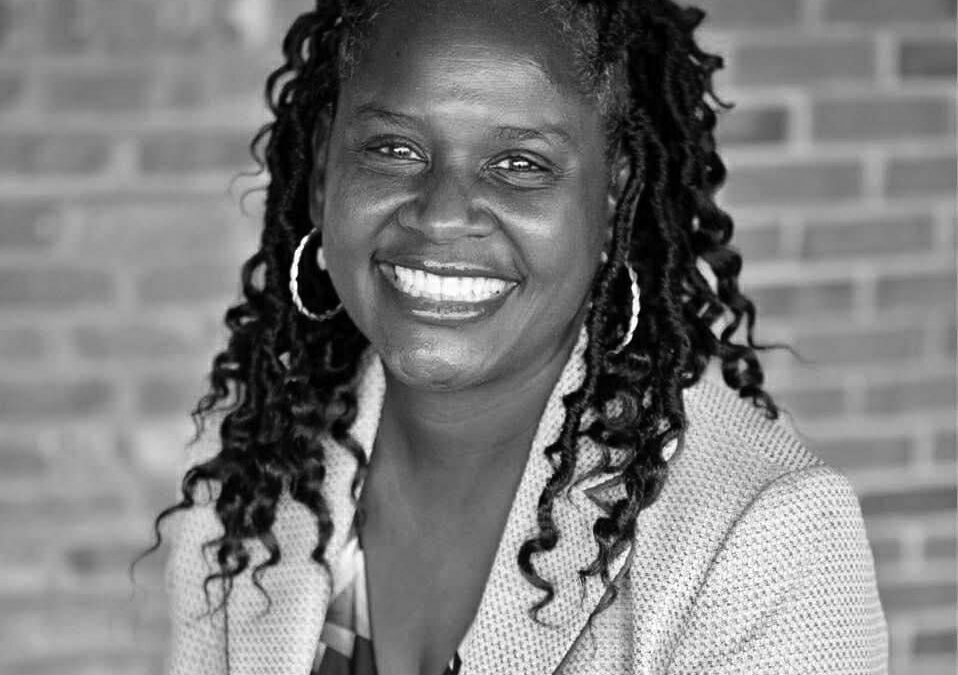
BY LATICIA T. SMITH
OPINION —
We are [several] days into the new year and it’s hard to get excited when there are so many scary things happening on the political landscape. Twenty-four people killed during a drone strike in Russian-occupied Ukraine and U.S. Military Action in Venezuela. Both of these events, over the last few days, have left many of us feeling extremely anxious, worried and concerned about the current political landscape.
So instead of focusing on New Year’s resolutions and a “fresh new start,” or reflecting on a newfound pursuit of personal growth, renewed motivation and purpose, I have found that the only “sane” thing that many of us have been able to do during this scary time — is to talk about the “insane,” which is politics or the political landscape we are currently living in.
Although talking about politics can have negative outcomes because political beliefs are deeply tied to a person’s core values and identity, and they can make people feel like they are being personally attacked rather than having simple differences of opinion, we have to talk about what is happening on the political landscape. We have no choice.
Why? Because some stuff just cannot or should not be ignored.
For me though, as the president of the local NAACP, Lee County Branch No. 5038, I am encouraging that we talk about voter engagement in lieu of talking about politics. The key difference is that voter engagement is a neutral process focused on participation in the democratic system and can include, voter education, voter awareness, voter outreach, voter mobilization and voter restoration – to name a few; while talking politics involves expressing opinions on specific policies, candidates or ideologies.
Why does voter engagement matter?
Simply Put…
The 2026 political season is going to be crucial and active voter engagement is the foundation of a healthy democracy.
What do we know for sure?
This year the pivotal midterm elections will shape the remainder of President Trump’s second term.
Additionally, in Alabama, alone, the 2026 political season is being called “Alabama’s biggest political shakeup in decades because it marks a massive turnover of the state’s most powerful leadership positions.”
What else do we know for sure?
Well-informed voters are more civically and politically engaged and are more likely to vote and hold their representatives accountable through elections and the power of their vote.
As a result, if we are going to truly make a difference and if we are going to truly put in the work to make sure that people know they matter, we must become trusted messengers and commit to doing the following type of work in communities that are often overlooked, underserved and under-resourced:
1. Help build voter knowledge,
2. Target voter education and outreach programs through focused messaging and delivery, and
3. Use human experience to drive change, which means we need to showcase our local Lee County history makers in such a manner as to instill pride, to personalize the mantra of “We are because of them,” and to demonstrate, via history, the power of the vote.
So, why is this important?
And, more importantly, why should you care?
…Because “Knowledge is Power”
So, what’s happening in Alabama? What do you need to know?
Massive Leadership Vacancies
• Most of Alabama’s top offices, statewide, are open in 2026 due to term limits or incumbents seeking other roles.
• This creates a rare opportunity to elect leadership across the board and to change the landscape of our current political landscape in several races. This includes, but is not limited to the following races: the governor, the U.S. Senate, Lt. governor and the attorney general.
Control of Congress:
• All 435 House seats and 35 Senate seats are up for election.
• In Alabama, there are a total of 140 state legislative seats and nine federal congressional seats. As of January 2026, ALL 105 House seats and ALL 35 Senate seats in the Alabama Legislature are up for election. The U.S. Senate seat currently held by Tommy Tuberville is also up for election in 2026. All seven U.S. House seats are also up for election as part of the 2026 midterms as well.
Economic Referendum
Voters in Alabama and elsewhere are closely monitoring economic indicators like inflation, grocery prices and the impact of the administration’s “One Big, Beautiful Bill”.
The 2026 results will signal whether voters approve of the current economic direction.
State-Level Leadership
• 39 gubernatorial seats are contested, alongside numerous state legislative races that will influence local policies on issues like reproductive rights and education.
• In Alabama alone, there are currently several candidates for Governor as listed below.
– Sen. Tommy Tuberville.
– Former U.S. Sen. Doug Jones.
– Politician and Pastor Will Boyd.
– Businessman Chad “Chig” Martin.
– Businessman Ken McFeeters.
The “Affordability” Crisis
While the GDP, the Gross Domestic Product, the total monetary value of all final goods and services produced in the US, grew 4.3% in late 2025, approximately 50% of Americans believe the country is in a recession. In essence, the struggle is real, especially for middle and lower-income families, to cover basic necessities like housing, food, child care and health care, as costs have risen much faster than wages, leading people to cut spending, skip medical care and take on more debt. It’s driven by high inflation, stagnant wages and severe shortages of affordable housing, forcing many to spend over half their income on rent or face homelessness.
Therefore, voters are specifically focused on and are concerned, rightfully so, about the high cost of prices for “kitchen table” essentials like groceries; housing and utilities; and health care costs as enhanced Affordable Care Act (ACA) subsidies are expected to expire, potentially doubling monthly premiums for millions of families.
In conclusion
Be Informed.
Be Engaged.
Be Heard.
AND VOTE!
Laticia T. Smith resides in Auburn, Alabama. She is the current president of the NAACP Lee County Branch 5038, a nonpartisan organization whose mission is to achieve equity, political rights and social inclusion by advancing policies and practices that expand human and civil rights, eliminate discrimination and accelerate the well-being, education and economic security of Black people and all persons of color.
